
"How much does a website cost?" is the first question every business asks. And the answer - "it depends" - is frustrating, but true.
In this article you will learn the real market prices, what drives the cost, what the hidden expenses are, and most importantly, how to avoid paying more than you should.
A quality small-business website typically costs 1,500-9,000 EUR
In this article:
What drives the price of a website?
Before you stare at concrete numbers, you need to understand why prices vary so much. According to a GoodFirms survey, a basic website runs about 1,000-3,000 EUR, a mid-sized site 4,500-18,000 EUR, and enterprise projects 18,000-45,000+ EUR depending on the requirements.
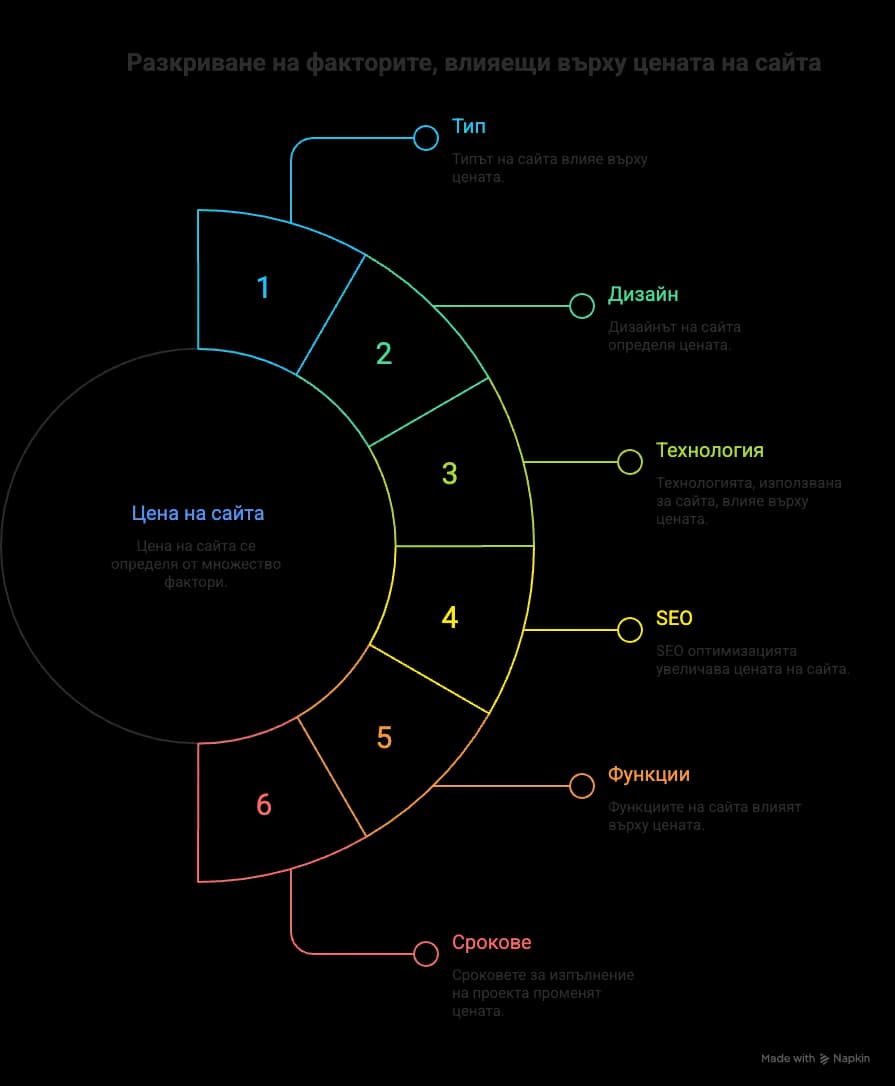
Here are the six key factors that affect the price:
1. Site type: A landing page with 5 pages is very different from an online store with 500 products. More functionality means a higher price. A simple landing page can cost 250-500 EUR, while a full e-commerce store starts at 1,500 EUR.
2. Design: A ready-made template costs 150-250 EUR, while custom design can reach 500-1,500 EUR. Custom design sets your brand apart and creates a stronger impression, but it is not mandatory for every business.
3. Technology: WordPress is cheaper to start with, but it needs more upkeep. Modern stacks like Next.js are faster and more secure, but the upfront investment is higher. The technology directly affects future maintenance costs. For a detailed comparison, see WordPress vs custom website.
4. SEO optimization: Basic SEO is usually included. Advanced SEO (research, strategy, content) adds 250-1,000 EUR to the price. Without SEO, your site stays invisible in Google - like a billboard in the desert.
5. Special features: Booking systems, calculators, integrations with third-party services - every extra feature adds 100-500+ EUR to the price. It is important to decide which features you truly need from day one.
6. Deadline: Rush jobs (under 1 week) usually cost 30-50% more. Plan at least 2-4 weeks ahead for the best price and quality.
How much does each type of website cost? (2026)
Here are realistic price ranges. These numbers are for quality work, not the cheapest option, which often leads to rework and extra spending.
Quick summary:
250 - 800 EUR
Landing page
800 - 1,800 EUR
Business website
1,500 - 4,000+ EUR
Online store
Landing page: 250 - 800 EUR
Includes 1-5 pages, key info about the business, a contact form, and a mobile-responsive design. A good fit for freelancers, small businesses, and new companies that want a basic online presence.
Typically included: home page, "About us", services or products, contacts with form, basic SEO.
Business / Corporate website: 800 - 1,800 EUR
Includes 5-15 pages, professional design, blog section, gallery, and Google Analytics integration. This is the most popular choice for established businesses with a team and several service lines.
Typically included: everything from the landing page plus blog/news, portfolio/projects, team page, client testimonials, advanced SEO.
Online store (E-commerce): 1,500 - 4,000+ EUR
Includes a product catalog, cart, online card payment, courier integration, and order management. For a serious online store, budget at least 2,000 EUR if you want a quality result.
Typically included: product pages with filters, cart and checkout, Stripe payment integration, courier integration, admin panel for orders.
| Site type | Price range | Timeline |
|---|---|---|
| Landing page | 250 - 800 EUR | 1-2 weeks |
| Business website | 800 - 1,800 EUR | 2-4 weeks |
| Online store | 1,500 - 4,000+ EUR | 4-8 weeks |
| Custom platform | 4,000 - 15,000+ EUR | 2-6 months |
Note: These prices are indicative for the European market. For comparison, in larger markets like the US prices run higher - GoodFirms puts a quality small business website around 4,500-9,000 EUR.
What are the hidden and recurring costs?
The one-time build fee is only the start. Here is what you should plan to pay every year:
Domain (.com / .bg): 10-30 EUR/year. A .com domain runs about 12 EUR/year, while a country-specific domain like .bg is a bit pricier at 25-30 EUR/year. The domain is your website's address and it's required.
Hosting: 50-200 EUR/year. Shared hosting starts around 50 EUR/year, while VPS or cloud hosting can reach 100-200 EUR/year. The right choice depends on your traffic and how complex the site is.
SSL certificate: Free. Let's Encrypt provides free SSL certificates that are perfectly sufficient for most websites. Paid SSL certificates are rarely necessary.
Maintenance (optional): 0-150 EUR/month. You can pay hourly (15-30 EUR/hour) or on a retainer (25-150 EUR/month). Read more about what website maintenance covers.
Important: Some agencies offer "free" websites with a 25-50 EUR monthly fee. Over 3-4 years you pay more than the one-time build cost, and you do not actually own the site.
Total annual costs: Minimum around 100 EUR/year (just domain + hosting), with basic maintenance around 250 EUR/year, and with full maintenance and SEO around 1,000+ EUR/year.
7 ways to save money (without cutting corners on quality)
Here is what I would tell a friend who asked me how to get a website without throwing money away:
1. Start small, grow over time: You do not need a 20-page site from day one. Start with 5-7 key pages and add more as you need them. If you already have a website, consider a redesign instead of building from scratch. You save 30-50% of the initial cost.
2. Prepare the content in advance: Text, photos, logo - if you have them ready, you save time and money. Many developers charge extra for "waiting on materials" or writing copy. Saves you 100-250 EUR.
3. Pick a tech with low running costs: WordPress looks cheap up front, but plugins, updates, and security cost you every year. A static site built with Next.js can be hosted for almost nothing and does not need constant maintenance. Saves you 250-800 EUR/year.
4. Do not pay for "premium" things you do not need: Scroll animations on every section? An AI chatbot? 3D elements? If they do not bring direct value to your customers, they are waste. Focus on a clear message and easy navigation.
5. Always ask for portfolio examples: Before you pay a deposit, ask for 3-5 links to real websites. Open them on your phone, check the speed in PageSpeed Insights. This saves you from bad developers.
6. Avoid "free" offers: "Free website" means either a monthly fee you pay forever, or a result so bad you will pay twice over for a rebuild. Free always costs the most.
7. Invest in SEO from day one: A beautiful website without SEO is like a billboard in the desert. Make sure basic SEO is included: proper titles, meta descriptions, fast speed, mobile version. That brings you free traffic for years to come.
"Do not pick the cheapest option, but do not pick the most expensive either. Look for a developer who asks questions about your business, not just your budget."
- The golden rule for picking a web developer
DIY, freelancer, or agency?
According to data from Shopify, the options range from 10-45 EUR/month for DIY builders to 900-18,000+ EUR for custom development. Here is what each option involves:
If you are leaning toward hiring help, here is how to choose a web agency without getting burned.
DIY (Wix, Squarespace): 80-250 EUR/year
Pros: The cheapest option, full control over the content, easy to launch.
Cons: Template look and feel, limited SEO, slower speed, locked into the platform.
Good for: Hobbies, personal projects, testing an idea before a serious investment.
Freelancer: 250-1,500 EUR
Pros: Cheaper than an agency, direct communication, flexibility.
Cons: One person means delivery risk, variable quality, and they can disappear or be unavailable.
Good for: Small projects with clear requirements and a limited budget.
Digital agency: 800-5,000+ EUR
Pros: Professional result, a team of specialists (designer, developer, SEO), warranty and support, SEO + marketing under one roof.
Cons: Higher price, sometimes a slower process because of coordination.
Good for: Serious businesses, long-term projects, and companies that want quality and peace of mind.
What is the return on investment (ROI)?
A website is not an expense, it is an investment. According to HubSpot, for B2B brands the combination of website, blog, and SEO is the single biggest ROI-driving channel - ahead of paid social and every other option.
- 83% of small businesses already have a website - it's now table stakes (Clutch, 2025)
- The most digitally advanced small businesses earn up to 2x more revenue per employee (Google/Deloitte)
- SEO delivers an average ROI of 748% - about 9 EUR back for every 1 EUR invested (First Page Sage, 2025)
Sources: Clutch, Google/Deloitte, First Page Sage
Data from HubSpot shows that for B2B companies, the top ROI channel is the combination of website + blog + SEO. In other words, investing in a quality website with strong SEO delivers the best long-term return.
Checklist: What to ask before you pay
Ask every developer these questions before you put down a deposit:
Red flags: when to walk away from a quote
If you spot any of these signs, think twice:
- No portfolio or references - Every experienced developer has something to show
- Asks for 100% upfront - A 30-50% deposit is normal, with the balance on delivery
- "Promises the #1 spot in Google" - Nobody can guarantee SEO rankings
- Price is too low - A 100 EUR website means a template with no optimization
- Does not ask about your business - A good specialist starts by understanding the needs
- Refuses to give you code access - The website is yours and you should have full control
Conclusion
A website is not an expense, it is an investment. A quality site attracts customers, builds trust, and works for you 24/7. Do not chase the cheapest option, look for the best value. Pay once for quality instead of twice for a rebuild.
Sources
- GoodFirms: Website Construction Cost Survey (2026) (accessed June 2026)
- Shopify: How Much Does a Website Cost (2025) (accessed June 2026)
- Clutch: State of Small Business Websites (2025) (accessed June 2026)
- First Page Sage: SEO ROI Statistics (2025) (accessed June 2026)
- Google/Deloitte: Connected Small Businesses (accessed June 2026)
- HubSpot: Marketing Statistics (accessed June 2026)