


"How much does a mobile app cost?" is usually the first question we get, and the honest answer is: it depends on what you build it with. The same idea can cost EUR 2,000 or over EUR 30,000 depending on one decision - the architecture. Let us break down the real numbers so you know what you are paying for.
Mobile is now 51% of all web traffic worldwide, ahead of desktop
In Bulgaria there are 9.22 million mobile connections, around 138.7% of the population, and the phone is the most-used device for going online (DataReportal, 2024).
How much does a mobile app cost in 2026?
In 2026, a mobile app on the Bulgarian market costs roughly EUR 1,300 to 2,500 for a PWA (Progressive Web App), EUR 4,000 to 13,000 for a hybrid app, and EUR 10,000 to 30,000+ for native. These are our own working ranges, not theoretical figures, and the cost follows the features, not the calendar.
A quick warning about numbers you find online. International sources often quote much higher figures (tens of thousands of dollars and up) because they reflect the US market. Keep those separate from Bulgarian prices, otherwise you will scare yourself off a project that is actually affordable here.
Bars show the upper end of each range. These are our own price ranges, VAT excluded.
Beyond the features, it matters who builds the app. A freelancer, a small studio and a large agency price the same project differently, because their overheads, team and guarantees differ. The same app can easily get quotes that are twice as far apart.
And a warning: if one quote is drastically lower than the rest, that is rarely good news. It usually hides missing maintenance, a template solution, hidden charges later, or no real testing. Quality development has its price, and a realistic quote saves money in the long run.
Want concrete numbers for your case? See the packages and prices of our service.
PWA, hybrid or native: which architecture?
The architecture is the single biggest cost driver, so it deserves a clear comparison. Cross-platform tools like React Native and Flutter let one team write a single codebase for both iOS and Android, which cuts development cost by 30-50% versus two native builds (TekRevol, 2025). Flutter (9.4%) and React Native (8.4%) are the two most popular cross-platform frameworks among developers (Stack Overflow Developer Survey, 2024).
Here is what each of the three actually means:
PWA
A web app that runs in the browser and installs to the home screen without an app store. The fastest and cheapest option, but it does not appear in the App Store or Google Play, has a weaker offline mode and limited push notifications - exactly the limits a hybrid app removes.
Hybrid
One app built with React Native or Flutter, shipped to iOS and Android at once. A near-native feel at a much lower cost. The choice for most businesses.
Native
Two separate apps - for iOS (Swift) and Android (Kotlin). Maximum performance and full hardware access, but the most expensive. For games and heavy graphics.
| Criterion | PWA | Hybrid | Native |
|---|---|---|---|
| Cost | Lowest | Medium | Highest |
| Timeline | 4-8 weeks | 3-5 months | 6-12 months |
| Performance | Good | Very good | Maximum |
| App store | Not required | Yes | Yes |
| Offline / hardware | Limited | Most features | Full access |
| Best for | Catalogs, bookings, info apps | Most business apps | Games, heavy graphics |
Rule of thumb
If you mostly show content, services or a catalog, start with a PWA or a hybrid app. Choose native only if you have a clear reason - a game, heavy graphics or specific hardware access. That way you do not pay for features you will never use.
In short: start with the cheapest option that meets your goal, not the most impressive one. Most of our clients who come asking for a native app actually need a hybrid one. For a small or medium business, React Native is usually the smartest call: you build the app once and ship it to iOS and Android, instead of paying for two separate builds. You can see the full picture on our mobile app development page.
What actually drives the final price?
Two apps in the same category can differ tenfold in price. The reason is rarely the design alone, it is the depth behind the screens. These five factors move the number the most:
- Number of features. Login, payments, chat, maps, push notifications - each adds design, development and testing time.
- Integrations. Connecting to a CRM, ERP, payment provider or external API is often the most expensive part.
- Custom design. A unique interface and animations cost more than a clean template-based design.
- Number of platforms. iOS only is cheaper than iOS plus Android. Cross-platform keeps both close to one price.
- Backend and admin panel. If the app stores data, you also pay for a server, a database and an admin panel to manage it.
How long does development take?
A simple PWA takes around 4-8 weeks, a medium hybrid app 3-5 months, and a complex app 6-12 months. Time and cost move together, because most of the budget is people-hours. A longer timeline almost always means more screens, more integrations or more platforms, not a slower team.
If your idea is more of a business tool than a consumer app, it might also fit our custom software development service, where we plan the same way: scope first, price second.
The real cost: a 3-year view
The build price is only the start. Plan for 15-20% of the build cost per year in maintenance (industry standard, Imaginovation, 2026): bug fixes, updates for new iOS and Android versions, security and small improvements. Over three years that adds roughly half the build cost again. Skipping it is the most common reason apps quietly stop working.
Illustrative, based on mid-range build cost and 18%/year maintenance.
Hidden costs people often forget
Beyond the build and maintenance, a few smaller but recurring costs are easy to miss. Put them in the budget from day one so there are no surprises:
- Store accounts. An Apple Developer account costs about EUR 90 per year, and a Google Play account about EUR 23 one time.
- Hosting and backend. If the app stores data, you pay monthly for a server and a database that keep it running.
- Payment fees. If you take online payments, the provider keeps a small percentage of each transaction (usually 1.4-2.9%).
- New features. The market moves, and a living app moves with it. Plan a small budget for improvements after launch.
From our experience: the EcoHunt app
We learned most of this the practical way. EcoHunt is a gamified mobile app we built that turns recycling into a game with points and challenges. We chose a cross-platform stack on purpose: it let us ship to both iOS and Android from one codebase and keep the budget where it mattered, in the game mechanics and the user experience.
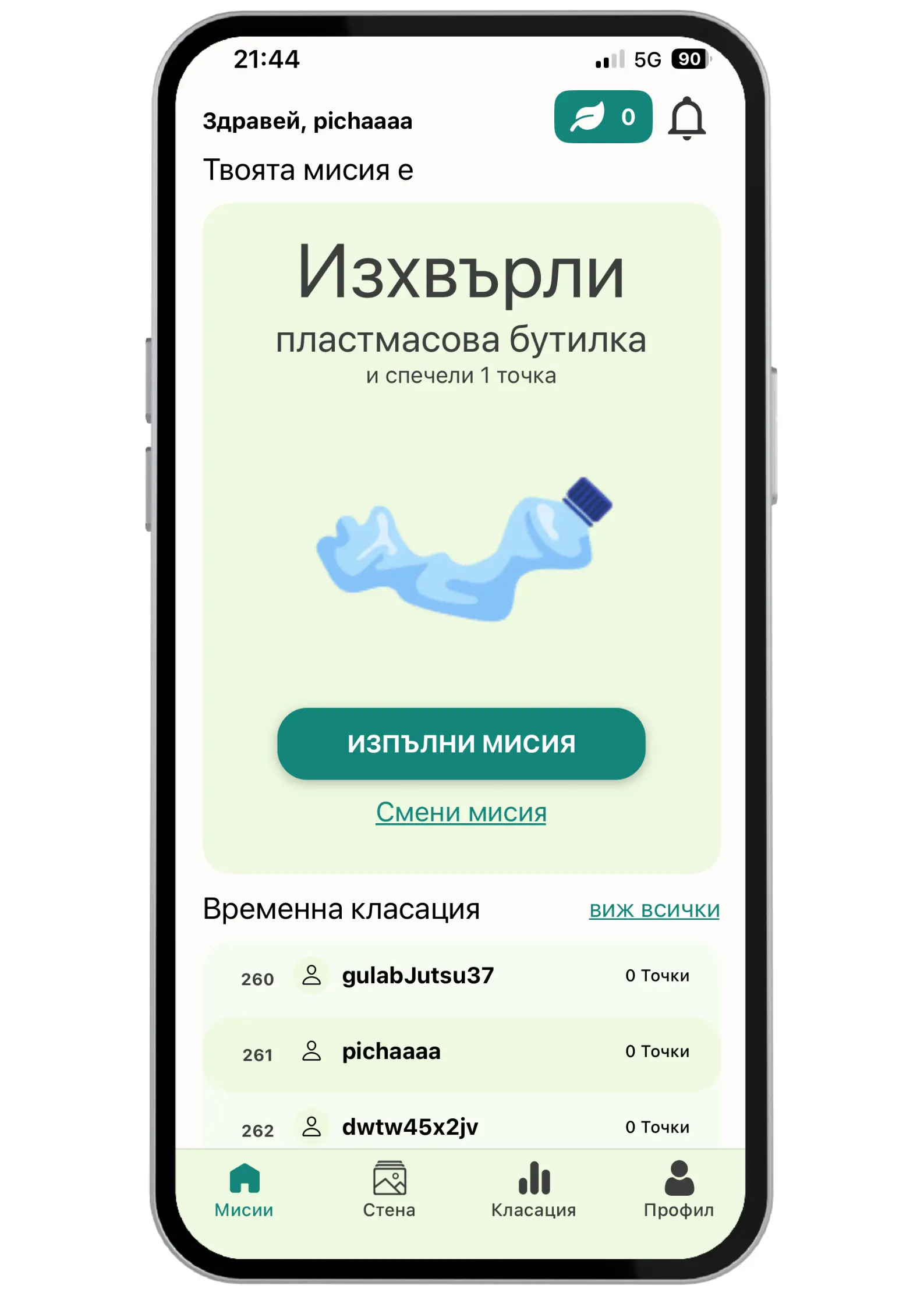
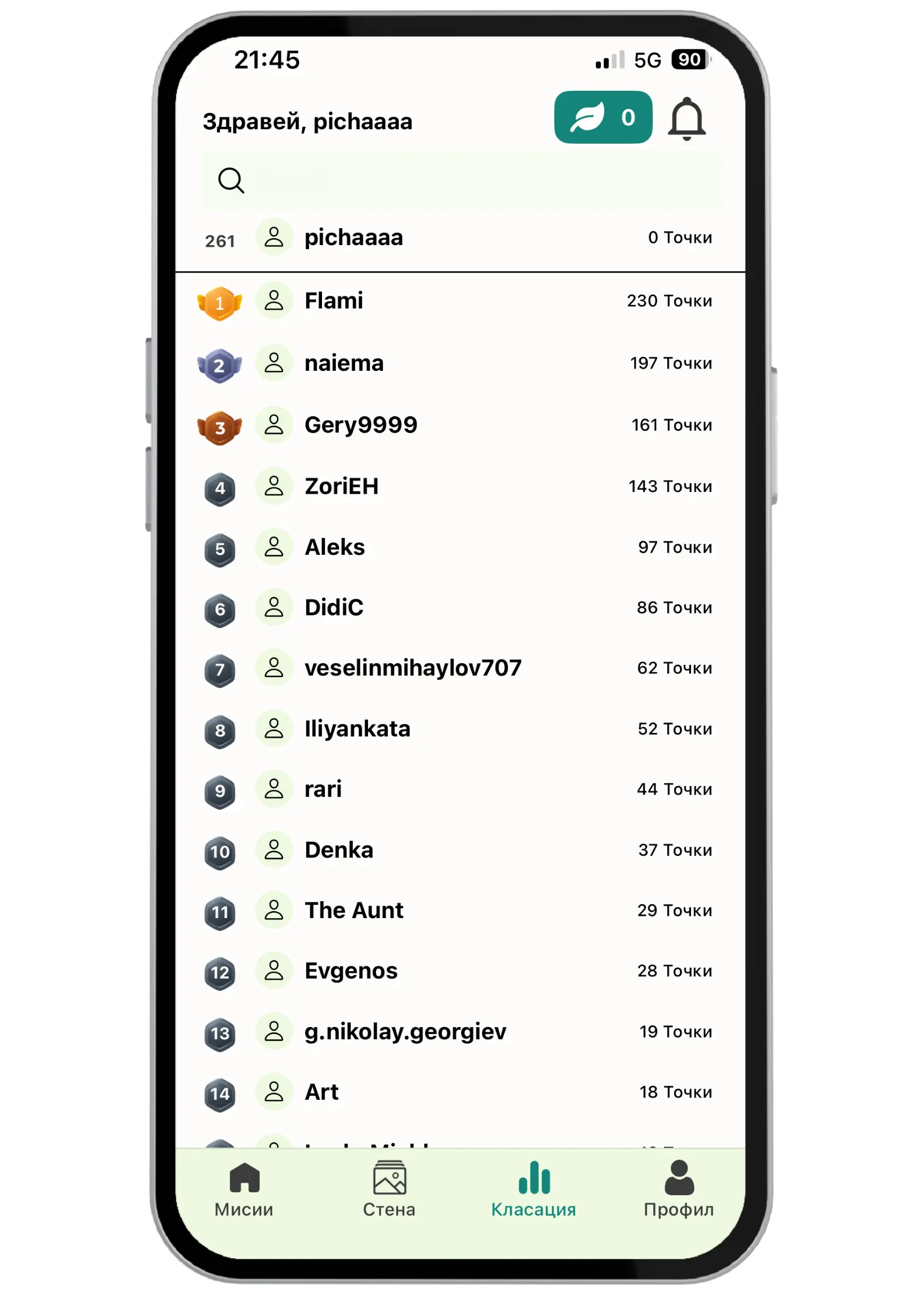
Why obsess over engagement? Because the average app keeps only about 6% of its users by day 30 (Business of Apps, 2024). An app nobody opens is the most expensive app of all. That is why we spent the maintenance budget on features that keep people coming back, not just on bug fixes.
You can see the full project in our EcoHunt case study.
Do you even need an app, or is a website enough?
Be honest about the goal before you spend a cent. If you mainly need to be found, present services and take inquiries, a fast mobile-friendly website (or a PWA) usually beats a native app on cost and reach. Mobile commerce already makes up about 59-60% of all e-commerce sales (Statista, 2025), and 53% of users abandon a page that takes over 3 seconds to load (Google). Speed and reach often matter more than an app icon.
Not sure which way to go? Read why the mobile version matters, or compare with website development. When an app is the right call, we will tell you the cheapest version that still works, and we can build it for you.
Frequently asked questions
Sources
All sources retrieved on 7 June 2026.
- StatCounter, Desktop vs Mobile Market Share Worldwide, 2026 - gs.statcounter.com
- DataReportal, Digital 2024 Bulgaria, 2024 - datareportal.com
- Stack Overflow Developer Survey, 2024 - survey.stackoverflow.co
- Business of Apps, App Retention Rates, 2024 - businessofapps.com
- TekRevol, Native vs Cross-Platform Development Costs, 2025 - tekrevol.com
- Soft Intellect, mobile app pricing, 2025 - soft-intellect.bg
- Statista, Mobile commerce share of e-commerce, 2025 - statista.com
- Google / Marketing Dive, 53% abandon sites slower than 3 seconds - marketingdive.com
- Imaginovation, Mobile App Maintenance Cost, 2026 - imaginovation.net